Key Takeaways
- Not all herbal teas are considered appropriate during pregnancy: Certain herbs may have safety considerations depending on the stage of pregnancy and amount consumed.
- Some herbal teas have been studied more extensively than others: Ginger, peppermint, and raspberry leaf are among the teas most frequently discussed in pregnancy-related research.
- Herbal ingredients can vary widely between products: Tea blends may contain multiple botanicals with different uses and safety profiles.
- Caffeine-free does not always mean pregnancy-safe: Herbal teas and supplements are subject to different considerations than traditional black or green tea.
- Healthcare guidance is important when choosing herbal products during pregnancy: Individual health needs, medications, and pregnancy history may influence what is appropriate to use.
Pregnancy comes with its fair share of challenges, and with so many medications off-limits, it’s no surprise that many moms-to-be look for more natural ways to feel better. In fact, about 30% turn to herbal remedies like tea during this special (and sometimes tricky) time. But doctors caution that “natural” doesn’t always mean “safe.” When it comes to herbal tea and pregnancy, there’s still a lot we don’t know, and plenty of gray areas to navigate. Here’s what the research says about what teas to sip while breastfeeding a baby.
Herbal Teas and Pregnancy: How to Stay Safe
Types of tea
It’s important to understand the difference between non-herbal and herbal tea. A non-herbal tea is made from the leaves of the tea plant and includes white, oolong, green, and black teas. These have caffeine unless they are a decaf version. Aside from the caffeine content, non-herbal teas may have health benefits, but according to the American Pregnancy Association, “pregnant and breastfeeding women are often encouraged to cut down on or eliminate caffeine. The Natural Medicines Database rates both green and black teas as “possibly unsafe” in pregnancy when used in large amounts, mainly due to high caffeine intake, but “possibly safe” when used in moderate amounts.
Herbal teas are not made from the tea plant but instead are made from various other plants and their plant parts, such as skins, roots, leaves, and/or berries. Herbal teas do not have caffeine (unless it has been added).
Safety considerations
There is very limited research on the safety and effectiveness of herb usage during pregnancy. It is difficult to do research on pregnant women due to ethical concerns about risks to the baby and mother. Even something as natural and simple as herbal tea can be potent enough to exert a response in the body similar to medicine. Therefore, expecting moms need to be careful what they sip. Some of the substances during pregnancy are assumed to be safe, especially if limited to moderate amounts, which is typically no more than two cups of tea per day.
Aside from the dose, the safety of herbal tea in pregnancy also depends on the preparation and trimester. Ensure any teas used are the exact ingredients needed. Different parts of the same plant could have different harms or benefits (e.g., leaves versus berries). Ensure the herbal tea is from a trustworthy source and tested for purity to avoid any harmful by-products. The first trimester may be the time to be most cautious due to the rapid growth of the baby during that time.
Even for herbal teas considered “likely safe,” personal risk factors could make a tea not recommended for some. Thus, always consult a health care provider for more personalized advice before trying herbal teas. Also, the risks for different herbs can vary between pregnancy and lactation, so don’t assume that it’s safe during pregnancy; it also applies to lactation.
Herbal Teas in Pregnancy: Types and Their Safety
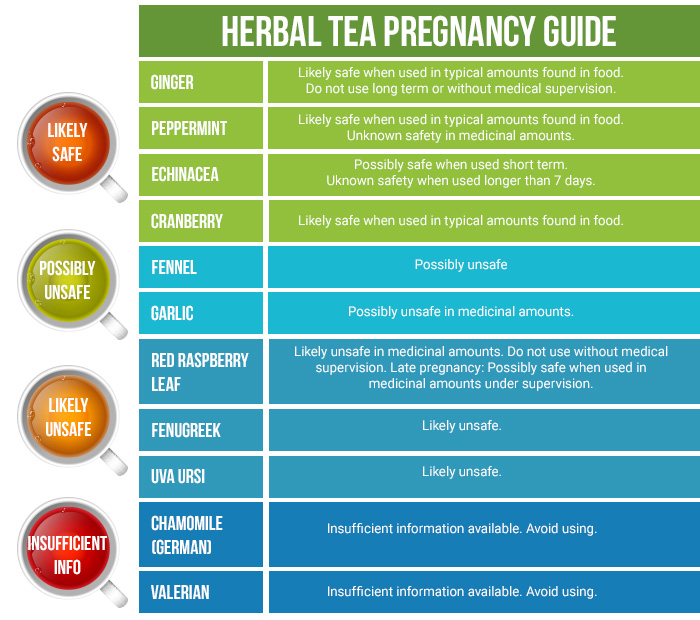
While typical herbal tea use varies by culture, the following chart is an overview of the most commonly used herbs and teas in pregnancy and their safety rating. This safety data can appear alarming for some commonly used herbs. Keep in mind that small amounts (the amount typically used in food) are not considered a “medicinal amount” for most common herbs. Small amounts, irregularly used, may not pose a problem, but large doses of herbs in a tea may. If in doubt, always consult a health care professional.
Summary
Before sipping herbal tea in pregnancy, it is advised to only use commonly used teas assumed to be safe, ensure the brand and preparation are safe, and only use moderate amounts. As always, consult a health care provider before use.
References:
- American Pregnancy Association. (2023). Herbal tea and pregnancy: Assessing safety, ingredients, and consumer guidelines. APA Healthy Pregnancy Educational Series.
- Therapeutic Research Center. (2019). Natural Medicines: Evidence-based clinical database for dietary supplements, natural ingredients, and integrative therapies. Therapeutic Research Faculty.
DISCLAIMER:
These statements have not been approved by the Food and Drug Administration. These products are not intended to diagnose, treat, cure, or prevent disease.














































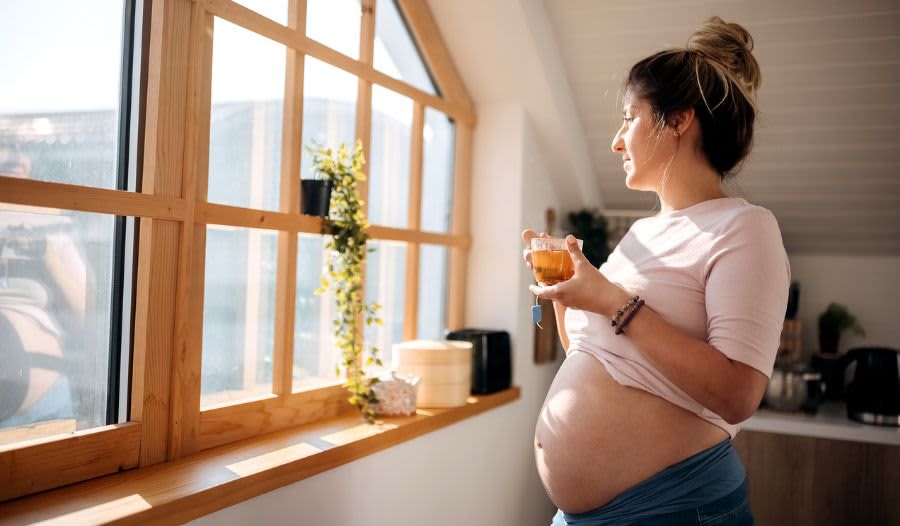
 Table of Contents