iHerb has strict sourcing guidelines and draws from peer-reviewed studies, academic research institutions, medical journals, and reputable media sites. This badge indicates that a list of studies, resources, and statistics can be found in the references section at the bottom of the page.
Capsaicin is the key: The active compound responsible for cayenne's signature heat also provides its main benefits, including joint and muscle comfort, healthy circulation, and anti-inflammatory support.
Fresh peppers pack more nutrients: A whole, raw cayenne pepper is a strong source of vitamin C, antioxidants, and fiber. Ground powder only provides trace amounts of these nutrients due to the tiny serving sizes.
Metabolism benefits are real but modest: Capsaicin can temporarily boost your metabolic rate and help manage blood sugar, but it is not a magic weight-loss solution.
Gut and heart health support: Diets rich in chili peppers are associated with cardiovascular benefits, and the fiber in fresh peppers helps feed a healthy gut microbiome.
Skip the detox myths: Cayenne pepper does not "detox" the body or flush out the liver, and popular cayenne-lemon water cleanses typically only result in temporary water weight loss.
Cayenne pepper is a spice made from dried Capsicum annuum chilies, prized both for its heat and for capsaicin — the plant compound behind its studied effects on metabolism, circulation, and pain. Add a pinch to a dish, and you'll feel that compound before you taste anything else, and that single reaction traces back to nearly everything in this guide, including a few of the safety concerns. Here's what the research actually supports: how much is reasonable to take, who should be careful with it, and how to work it into your diet without overdoing it.
What Is Cayenne Pepper?
Cayenne peppers grow on a bush and have red, rippled skin. While often considered vegetables, they are more accurately classified as fruits because they contain seeds. Cayenne peppers are types of Capsicum annuum, like bell peppers, which are flowering plants in the nightshade family. They get their name from their origin city, Cayenne, French Guiana.
Cayenne peppers can reach between 4 and 10 inches long. They grow best in moist soil in warm, sunny climates where the temperature is between 70 and 84 degrees Fahrenheit.
Cayenne peppers owe their fiery flavor profile to a compound known as capsaicin and are often used in culinary dishes to boost spice. Cayenne powder, also used for culinary purposes, is made from a blend of different types of dried chili peppers.
Cayenne Pepper Nutrition Facts
As a source of fiber and vitamins C, A, B6, and K, cayenne pepper offers many nutritional benefits. In fact, one red hot chili pepper has 72% of the Daily Value (DV) of vitamin C, 48% DV of vitamin A, 13% DV of vitamin B6, and 5% DV of vitamin K. Cayenne peppers also contain the powerful plant compounds flavonoids and carotenoids, and the minerals potassium, magnesium, and zinc.
A diet high in antioxidant-rich plant-based foods like cayenne peppers may help reduce the risk of diet-related metabolic and cardiovascular challenges.1
Cayenne pepper can mean the ground spice or a whole fresh pepper, and the numbers are wildly different between the two. Here is a comparison of both, pulled directly from USDA FoodData Central:
Calories
Ground Powder (1 tsp / 2 g): 6 calories
Raw Chili Pepper (1 whole / 45 g): 18 calories
Vitamin C
Ground Powder: 1.4 mg (2% Daily Value)
Raw Chili Pepper: 64.7 mg (72% Daily Value)
Vitamin A
Ground Powder: 37.5 mcg RAE (4% Daily Value)
Raw Chili Pepper: 21.6 mcg RAE (2% Daily Value)
Vitamin B6
Ground Powder: 0.04 mg (3% Daily Value)
Raw Chili Pepper: 0.23 mg (13% Daily Value)
Vitamin K
Ground Powder: 1.4 mcg (1% Daily Value)
Raw Chili Pepper: 6.3 mcg (5% Daily Value)
Potassium
Ground Powder: 36.3 mg (1% Daily Value)
Raw Chili Pepper: 144.9 mg (3% Daily Value)
Fiber
Ground Powder: 0.5 g (2% Daily Value)
Raw Chili Pepper: 0.7 g (2% Daily Value)
A whole raw pepper is a genuinely strong source of vitamin C and contributes meaningfully to B6 and vitamin K. The powder you'd actually sprinkle on food is a different story. A typical serving is measured in fractions of a gram, so the vitamin contribution is closer to trace amounts. Fresh peppers also carry small amounts of magnesium and zinc alongside the potassium and fiber shown above.
What About the Antioxidants?
Beyond capsaicin, a raw cayenne pepper carries a meaningful antioxidant profile: beta-carotene (about 240 mcg per whole pepper), beta-cryptoxanthin (18 mcg), and a combined lutein and zeaxanthin content of roughly 319 mcg. These carotenoids work by neutralizing free radicals — unstable molecules that damage cells over time — and lutein and zeaxanthin in particular concentrate in the retina, where research links them to eye health and protection against age-related macular degeneration. Vitamin C, also present in meaningful amounts in the fresh pepper, adds its own antioxidant activity on top of that. None of this is unique to cayenne — bell peppers and carrots carry similar or higher amounts — but it's a real part of the nutritional picture that's easy to overlook when capsaicin gets all the attention.
What the Research Actually Shows About Cayenne Pepper's Benefits
Cayenne peppers get their spicy flavor from capsaicin, a compound responsible for many of cayenne peppers’ health benefits.
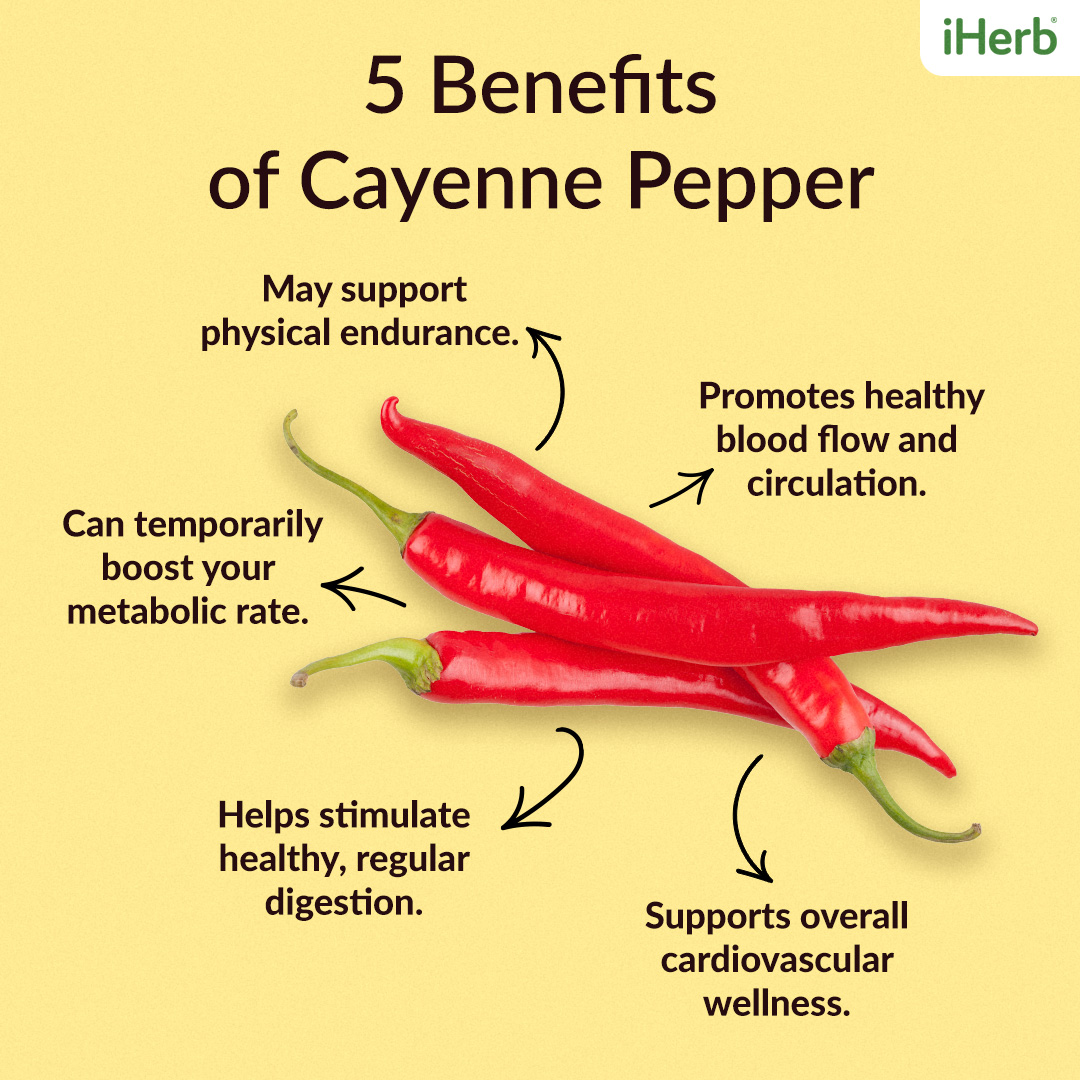
1. May Support Physical Endurance
Eating cayenne pepper or taking cayenne supplements is associated with reduced pain, improved athletic performance, and maintaining healthy blood sugar levels already within the normal range.2,3
2. Promotes Healthy Blood Flow and Circulation
While cayenne pepper may turn up the heat in a recipe, it actually supports a healthy inflammatory response. The capsaicin in cayenne peppers can support blood circulation, helping bring nutrients to organs and tissues.
3. Can Temporarily Boost Your Metabolic Rate
Consuming cayenne pepper may help manage blood sugar and temporarily increase metabolism. In one small study, women who consumed 5 grams of chili pepper experienced a smaller rise in blood sugar and had a higher metabolic rate for 30 minutes after drinking a sweetened beverage.5 A fast metabolism burns calories more quickly, which may support weight loss. Cayenne’s impact on metabolism is attributed to the compounds capsaicin and dihydrocapsiate.
4. Supports Overall Cardiovascular Wellness
Cayenne pepper may support cardiovascular health, help strengthen the circulatory system, and support healthy arteries, capillaries, and nerves. A review of the effect of capsaicin on the cardiovascular system found that chili pepper-rich diets are associated with long-term cardiovascular wellness and longevity. However, the mechanism isn’t fully understood.6
5. Helps Stimulate Regular Digestion
Cayenne peppers or cayenne powder can help stimulate the digestive system, helping improve bowel regularity. As a plant-based food, cayenne peppers can also support microbial diversity in the gut.
Cayenne peppers and other plant-based foods are rich in fiber. When bacteria in the gut digest high-fiber foods, they produce short-chain fatty acids. These short-chain fatty acids offer support for a healthy inflammatory response, immune balance, metabolic health, and robust cardiovascular, liver, and cognitive function.7
Where the Evidence Runs Out
A few claims about cayenne pepper get repeated online without much to back them up.
There's no established RDA or upper intake limit for cayenne or capsaicin, because it isn't classified as an essential nutrient. So any specific "safe daily amount" you see quoted is a study range, not a government guideline.
Claims that cayenne "detoxes" the liver or flushes out toxins do not hold up; your liver and kidneys handle that job regardless of what spice you're eating.
The weight-loss benefit gets oversold constantly. The metabolic bump from capsaicin is real but modest and short-lived, nowhere near a substitute for eating less or moving more.
The cardiovascular health boost has been shown at the trial level, but more data is needed to support this claim.
The cayenne-lemon water trend deserves the same scrutiny. It's a reasonable low-calorie swap if it gets you drinking more water instead of soda, but the rapid weight loss people report from "cleanse" style routines built around this drink is almost always water and stool weight, not fat.
Ways to Add Cayenne Pepper to Your Diet
There are many ways to up the spice and health benefits of the foods you eat with cayenne peppers or cayenne powder. Try these ideas to eat more cayenne pepper!
Add a pinch of cayenne powder to soups, sauces, or stews
Sprinkle over protein, such as eggs, salmon, or chicken
Add to hummus
Add to sautéed vegetable dishes
Add to cornbread
Add a pinch to hot chocolate
Add a pinch to lemonade or lemon water
Use in homemade dressings or marinades
Add cayenne pepper to homemade roasted, mixed nut mix
Add cayenne pepper to grain dishes like rice or quinoa
How to Eat Cayenne Pepper
There’s no wrong way to eat cayenne pepper: enjoy it raw, cooked, or dried into a powdered form. Cayenne pepper is also available in capsules for medicinal purposes as approved by your doctor.
Want to grow your own cayenne peppers? Ensure you wear gloves when you harvest them so the irritating oils of the peppers don’t accidentally get into your eyes or any cuts on your skin. Also, be sure to harvest the peppers before they become too soft. Pick them when they are still firm and require a little tug to separate from the plant.
To dry cayenne peppers, hang them on a clothesline in a dry area about 3 inches apart. They should be ready to use in about a week. Once dried, you can coarsely grind the peppers in a food processor to produce red chili flakes, such as the ones used on pizza, or grind them into a powder for use in cooking.
You can use fresh cayenne peppers raw or cook them like a jalapeno: just keep in mind that cayennes are about 10 times hotter than jalapenos. If you love heat in your food, try using them in fresh salsa, chili, or cooked down into a hot sauce. Remember, when working with fresh cayenne peppers, do not touch your eyes, and wash your hands often. For a convenient way to enjoy the benefits of cayenne pepper, buy ready-made cayenne powder or chili flakes.
Cayenne Lemon Water Tonic Recipe
Adding cayenne powder to a daily wellness tonic is a simple and effective way to enjoy the health benefits of cayenne peppers. Try this cayenne lemon water tonic below! Makes 4 Servings
Ingredients:
16 ounces of filtered water
1 whole lemon, juiced
½ teaspoon cayenne powder
1 teaspoon raw honey (or more to desired taste)
Instructions:
Heat water on the stovetop or in a kettle. Add in fresh lemon juice and cayenne pepper and stir. Then add honey and stir to melt. Enjoy warm or chilled. Wait until the water has cooled a bit before adding the honey: adding honey to boiling water dampens honey’s health benefits. Store extra tonic in the refrigerator and drink within 5 days.
Who Should Not Eat Cayenne Pepper
While cayenne pepper and cayenne powder are notable for their flavor and health benefits, some individuals may not tolerate them well. People with irritable bowel syndrome (IBS), an ulcer, diverticulitis, asthma, or taking a blood thinner should use caution when consuming cayenne pepper or cayenne powder. Cayenne is spicy, so take care when handling the fruit or spice to avoid getting it in your eyes, which could burn or cause extreme irritation.
Cayenne Pepper: Common Questions
Is cayenne pepper good for weight loss?
It gives a small, short-lived boost to metabolism through capsaicin's thermogenic effect, but nothing in the research suggests it causes meaningful weight loss on its own. It works better as one small piece of a broader calorie-controlled, high-fiber diet than as a standalone strategy.
How much cayenne pepper is safe per day?
A dash to half a teaspoon in food is a sensible starting point. Concentrated capsules should follow label dosing, and anyone on blood thinners, blood pressure medication, or diabetes medication should check with a doctor first.
Does cayenne pepper interact with medications?
Yes — blood thinners, ACE inhibitors, blood pressure medications, and diabetes medications are the main ones to watch. See the safety section above.
What's the difference between cayenne pepper and chili powder?
Cayenne is made from a single pepper variety and tends to be hotter and more one-note in flavor. Chili powder is usually a blend of several dried peppers plus seasonings like cumin and garlic powder, and it's generally milder.
Can cayenne pepper upset your stomach?
It can, especially if you have IBS, ulcers, diverticulitis, or acid reflux — capsaicin stimulates the digestive tract, which can aggravate those conditions. Starting small and watching how your body responds is the safer approach.
Is cayenne pepper the same thing as capsaicin?
Not quite. Capsaicin is the specific compound responsible for the heat and most of the studied effects. Cayenne pepper contains capsaicin plus fiber, other nutrients, and additional plant compounds.
What's the difference between cayenne pepper and paprika?
They come from related peppers, but the heat is nowhere close. Sweet paprika typically measures close to 0 SHU, and even hot paprika usually tops out around 500–1,000 SHU — compared to cayenne's 30,000–50,000 SHU. If a recipe calls for paprika's color and mild flavor, cayenne isn't a safe swap in equal amounts.
Can cayenne pepper help with congestion?
The evidence for this is about capsaicin nasal sprays, not eating cayenne pepper. Food-form cayenne may cause temporary sinus drainage as a reflex response, but that's not the same as a proven congestion treatment.
Can you eat cayenne pepper while pregnant?
Normal culinary amounts are generally considered fine. Concentrated capsaicin supplements haven't been well studied during pregnancy, so it's worth checking with a doctor before taking them.
DISCLAIMER:
These statements have not been approved by the Food and Drug Administration. These products are not intended to diagnose, treat, cure, or prevent disease.
Shop This Article
Keep Learning
Are Protein Bars Healthy? What to Look For and Which Ones Are Worth It
by Dr. Michael Murray, N.D.
4,063 Views
How to Use Moringa Powder: Easy Recipes and Tips
by Dr. Michael Murray, N.D.
170,013 Views
Appetite Suppressants: What Actually Works, What's Safe, and the Best Natural Options
by Dr. Hilda Wong, M.D.
15,935 Views
Psyllium Husk: Benefits, Dosage, Safety, and How to Use It
by Dr. Michael Murray, N.D.
112,663 Views
Nattokinase: Benefits and Supplements
by Dr. Michael Murray, N.D.
69,853 Views
Net Carbs: A Dietitian Debunks the Myths
by Lindsay Cohen, R.D.N.
1,984 Views
Why Starchy Foods Deserve a Spot on Your Plate (and Which Ones are Best to Eat)
by Joanna Foley, R.D.
15,986 Views
Is Oat Milk Healthy? A Dietitian Breaks Down the Nutrition Facts
by Joanna Foley, R.D.
21,480 Views
Running on Empty? These Subtle Signs Could Point to a Protein Deficiency
by Tracey Shaffer, R.D.N.
2,448 Views
Diabetes and Intermittent Fasting: The Benefits and Drawbacks
by Lindsay Cohen, R.D.N.
11,514 Views
Understand and Overcome Your Sugar Cravings With These Tips
by Joanna Foley, R.D.
3,648 Views
Snack Smart While Breastfeeding: What to Eat & Why It Matters



























































 Table of Contents