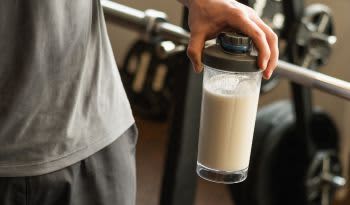
A Beginner’s Guide To Creatine: How To Take It, Loading vs. Maintenance
58,312 Views
Evidence Based
iHerb has strict sourcing guidelines and draws from peer-reviewed studies, academic research institutions, medical journals, and reputable media sites. This badge indicates that a list of studies, resources, and statistics can be found in the references section at the bottom of the page.
There’s been a lot of buzz around creatine lately, with new research highlighting benefits beyond building muscle. But creatine isn’t new, in fact, it’s one of the most well-researched supplements with countless studies demonstrating its effectiveness and safety, especially for building and maintaining lean body mass. And while creatine has traditionally been used by strength trainers, new research highlights its potential benefits for brain health, mood, and even perimenopause and menopause.
If you’ve been interested in trying creatine but aren’t quite sure where to start, this beginner’s guide to creatine is for you. Read on for how to get started, how to choose the right dose, whether you need a loading phase, and when to expect results.
Key Takeaways
Creatine is a naturally occurring compound that supports cellular energy production and is one of the most well-researched and safest supplements for beginners.
A daily dose of 3 to 5 grams is sufficient for most people to build and maintain muscle creatine stores without the need for a loading phase.
Consistency, hydration, and patience are essential; most benefits appear after muscle creatine stores reach saturation.
Beyond muscle mass and athletic performance, emerging research suggests creatine may also support brain health, mood, and cognitive function across the lifespan.
What Is Creatine? Why Do People Take It?
Creatine is a naturally occurring compound found in small amounts in foods like red meat and fish. It’s also produced by your liver, kidneys, and pancreas. In the body, creatine is stored primarily in muscle tissue, where it plays a key role in producing adenosine triphosphate (ATP), the molecule your cells use for quick bursts of energy. In people who eat a varied diet, muscle creatine stores are about 60 to 80% saturated.1
In simple terms, creatine helps your muscles recycle energy more efficiently. It helps your body create more ATP, reduces lactate buildup during exercise, and enhances glycogen storage in skeletal muscles.2 Ample studies show creatine improves physical performance in short-duration, high-intensity exercise activities and speeds recovery time.3 This is why it’s so commonly associated with strength training, sprinting, and other high-intensity activities.
People take creatine for a variety of reasons, including:
Supporting strength and power output during workouts
Enhancing lean muscle gains over time
Improving exercise performance and recovery
Supporting cognitive and cellular energy, a growing area of research
From my perspective as a doctor of traditional medicine, I see creatine as a modern ally to something we’ve always emphasized in Eastern medicine, cultivating strong, resilient cellular energy (or what we might call foundational Qi) at the cellular level. When your cells can efficiently generate energy, everything from physical strength to mental clarity improves.
Is Creatine Safe For Beginners?
Yes, extensive research has found that creatine supplements are safe for most healthy adults. The only consistently noted side effect of taking creatine supplements is weight gain, which is due to water retention initially (creatine pulls water into your muscles) and increased muscle mass with continued use.
It is important to remember that safety is about context. Creatine is exceptionally well studied, but it works best when paired with adequate hydration, mineral intake, and a balanced diet that supports kidney and liver health. Think of creatine as a tool that amplifies what you’re already doing well.
How To Take Creatine For The First Time
If you’re new to creatine, you may be wondering how to get started, what’s the right dose for me, should I do a loading phase, when can I expect results? When taking any new supplement, it’s a good idea to start slowly and monitor any effects or potential side effects.
For beginners, a moderate approach to creatine dosing is ideal. Consume between 3 to 5 grams daily for four weeks.1 Creatine stores in your muscles build up over time, so you’ll start seeing results after about a month of moderate daily creatine consumption. Once your muscle creatine stores have reached saturation and you’re seeing results, continue taking a maintenance dose of 3 to 5 grams daily.
While there are several forms of creatine on the market, creatine monohydrate is the most well-studied. It’s available as a powder, gummies, or capsules. All are equally effective, though powders are the most economical of the three.
With a powder, you can measure out the exact dosage and mix it into water, juice, or a smoothie. Gummies work well for those who don’t enjoy the taste or consistency of the powder, but you’ll usually need to eat a lot of them to get an adequate dose. Likewise with pills, you’ll probably need to take several to achieve the recommended dose, and they tend to be more expensive.
Since creatine stores build up over time, there’s no benefit to taking creatine at any particular time of the day. That said, consider taking creatine with a meal or snack; taking creatine with carbohydrate or carbohydrate and protein may promote greater creatine retention.1 And since creatine draws water into the muscles, be sure to stay well hydrated while taking creatine.
My recommendation is to skip extremes and focus on consistency. A simple daily ritual, like mixing creatine into your morning water, smoothie, or post-workout drink, aligns beautifully with a long-term wellness mindset rather than a short-term performance hack.
Creatine Loading vs. Maintenance: Do Beginners Need to Load?
You may have heard about creatine “loading” and “maintenance.” For years, people were advised to take high doses of creatine for five to seven days when first starting out in order to see results more quickly. This is called creatine loading. And while it will help your muscles reach saturation faster, and you’ll see results sooner, creatine loading may increase the chances of digestive upset, and it isn’t necessary.
The protocol for a creatine loading phase, as outlined by the International Society of Sports Nutrition, is to consume 5 grams of creatine monohydrate (or about 0.3 grams per kilogram of body weight) four times daily for five to seven days in order to saturate muscle creatine stores and see results more quickly. Once muscle stores are saturated, continue with a maintenance dose of 3 to 5 grams daily (larger people may require higher doses to maintain creatine stores).1
For beginners, starting with the maintenance phase lessens the chances of digestive upset and can help minimize potential weight gain. For maintenance, take 3 to 5 grams of creatine monohydrate for 28 days to reach muscle saturation, then continue with 3 to 5 grams for as long as you’d like to continue seeing results.1
Pros of Creatine Loading for Beginners
Faster saturation of muscle creatine stores
Experience results more quickly
Cons of Creatine Loading for Beginners
Increases risk of digestive discomfort
More complicated initial routine
More rapid initial weight gain
Not necessary for results
From a longevity and hormonal health lens, I generally advise beginners, especially women, to avoid aggressive loading. Gentle, steady supplementation supports the nervous system and reduces unnecessary stress on digestion and fluid balance.
Common Beginner Mistakes When Taking Creatine
Some of the most common mistakes people make when starting out with creatine include:
Inconsistency: You’ll feel results when your muscle creatine stores are saturated so, skipping days can decrease muscle creatine stores, limiting creatine’s effectiveness.
Expecting instant results: Building up the creatine stores in your muscles takes time. If you’re doing a loading phase, you can expect to see results in about a week. If you take a more moderate dosing approach, you’ll start to see results in about a month. Be patient.
Overthinking timing: While consuming creatine with carbohydrate or carbohydrate and protein may help build up stores faster, there’s no best time of day to take your creatine. So, the best time to take creatine supplements for you is when you actually remember to take them!
Stopping too early: Seeing results from taking creatine takes time, so stick with it. If you stop too early, your muscles won’t reach creatine saturation, and you’ll miss out on the benefits.
What Results Should Beginners Expect? (And When)?
Creatine is one of the safest, most effective aids for exercise performance. But the benefits don’t stop there. Creatine may also help with cognitive and brain health, especially as we age or when recovering from a concussion.
After reaching creatine muscle saturation (more on that in a bit), beginners may experience the following results when supplementing with creatine:1,3–5
Increased strength
Increased muscle mass (when accompanied by strength training)
Improved aerobic endurance
Enhanced recovery from intense exercise
Enhanced tolerance to exercise in the heat
Support for post-injury rehabilitation
Improved cognitive function and memory in older adults
Decreased brain fog associated with perimenopause
Mental health support
Recovery support for concussion or traumatic brain injury
Not everyone experiences the same benefits from creatine supplementation. People with lower dietary creatine intake (i.e., vegetarians and vegans) may see greater benefits from taking creatine, simply because their initial muscle creatine stores are lower.
The results you experience depend on when the amount of creatine in your muscles reaches saturation. In people with a varied diet, average muscle creatine stores are between 60 to 80% without creatine supplementation. If you start with a loading phase of 20 grams daily for 5 to 7 days, you should expect to see results in about a week. With a more moderate approach of about 3 to 5 grams daily, it’ll take about a month to see results.
What excites me most about creatine isn’t just bigger muscles; it’s the emerging data around brain health, mood, and hormonal transitions. In perimenopause and menopause, when women often feel more fatigue, brain fog, and reduced recovery, creatine can be a surprisingly supportive ally.
Remember, creatine won’t build muscle mass on its own. It simply gives your muscles the energy so you can push harder during workouts. You’ll need to combine creatine supplementation with consistent strength training to see muscle gains.
Creatine For Beginners: Getting Started Safely And Effectively
Creatine has earned its reputation as one of the most effective and well-researched supplements available, not just for building strength and lean muscle, but for supporting overall energy, recovery, and emerging areas like brain health and hormonal transitions. For beginners, the most important thing to remember is that creatine doesn’t need to be complicated to be effective. A consistent daily dose, adequate hydration, and patience are far more impactful than perfect timing or aggressive loading strategies.
Whether your goal is improving workout performance, supporting cognitive health, or simply maintaining muscle as you age, creatine can be a valuable addition to a balanced wellness routine. Start low, stay consistent, and be patient while you wait for results. When paired with regular movement, proper nutrition, and recovery, creatine can support strength and resilience well beyond the gym.
DISCLAIMER:
These statements have not been approved by the Food and Drug Administration. These products are not intended to diagnose, treat, cure, or prevent disease.
Shop This Article
Keep Learning
Your Mouth Has Its Own Microbiome. Here’s How to Support It.
by Dr. Meagan Purdy, N.D.
11,349 Views
The Evolution of Sports Nutrition: From 90s Aerobics to Modern Macros
by Dr. Jenelle Kim, DACM, L.Ac.
3,147 Views
Micronized Creatine vs. Monohydrate: Benefits & Dosage
by Ray Hosseini, C.P.T.
10,274 Views
Turkesterone: Benefits, Side Effects, and How It Works
by Dr. Hilda Wong, M.D.
11,123 Views
Creatine for Pilates: Enhance Your Core, Strength, and Recovery
by Dr. Carlie Biggins, N.D.
6,444 Views
Sport Certified Guide: How to Shop for Supplements You Can Trust
by Dr. Hilda Wong, M.D.
10,396 Views
Hot Exercise Workout Guide: Pros, Cons & Precautions
by Jessica Thiefels
2,596 Views
A Low-Impact Workout Provides These 5 Impressive Benefits
by Rachel MacPherson, CPT, CSCS
3,322 Views
Muscle Loss Happens. Here are 5 Things You Can Do to Prevent It.
by Dr. Josh Axe, DNM, DC, CNS
9,785 Views
What Is the 12-3-30 Workout? Burn Calories, Boost Weight Loss & More With This Fitness Trend
by Rachel MacPherson, CPT, CSCS
1,767 Views
Exercising in the Heat: How to Stay Safe While Working Out in High Temps
by Rachel MacPherson, CPT, CSCS
1,694 Views
What Happens When Your Body is Low on Electrolytes?



























































 Table of Contents